
Before the bell: Twelve Points for Investors

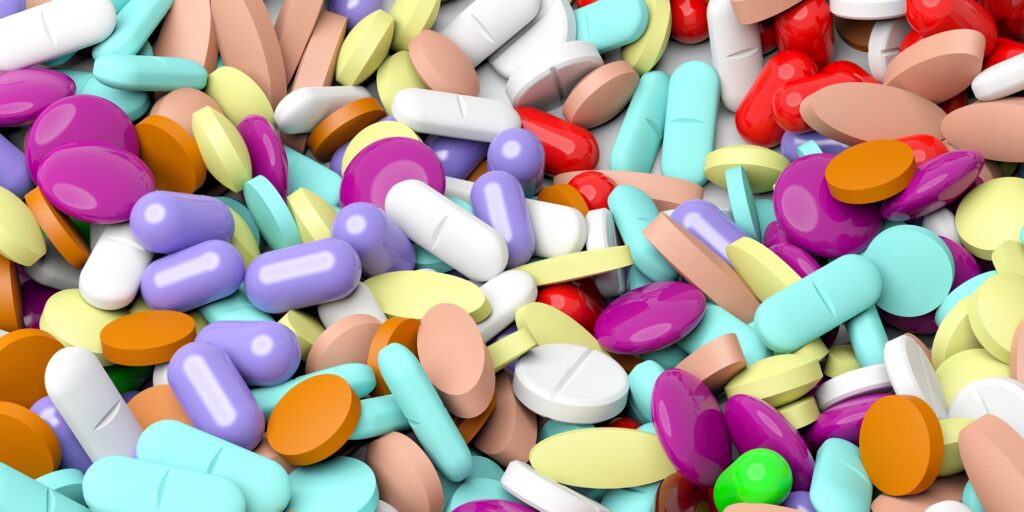
Hope for peace drives investor confidence. The pharmaceutical sector reaches for the aspirin, while OpenAI quietly prepares for an IPO.
Wall Street ended last Friday more or less flat. On a weekly basis, U.S. markets lost about 0.5%, bringing the S&P 500’s year-to-date loss to 3.8% and the Nasdaq’s to 7.2%. European markets are doing better for now. The Euro Stoxx 50 gained another half a percent on Friday and is already up 8.5% this year. The Belgian Bel20 is lagging behind, falling 2.7% last week as heavyweights UCB (-8.5%) and Argenx (-13.7%) dragged the index down. The losses could have been even worse if both pharma stocks hadn’t rebounded slightly on Friday by 1.8% and 2% respectively. Still, the sector might be under pressure again today: overnight, Donald Trump announced that at 9:00 a.m. in Washington (3:00 p.m. CET), he will unveil an executive order cutting prescription drug prices in the United States by 30% to 80%.
Outside pharma, it looks like a solid day for the markets. In Japan, the Topix fell 0.2%, but Hong Kong’s Hang Seng Index gained 0.9%. Alibaba (+1.9%), JD.com (+3%), and Lenovo (+4.7%) performed even better. Futures prices indicate a strong opening on Wall Street, with the S&P 500 expected to rise by 1.2% and the Nasdaq by 1.6%. Much can still happen, but for now, markets are betting on less conflict and more peace. In Nazareth-De Pinte, shareholders of pharmaceutical raw materials producer Fagron are meeting for their annual general meeting. That gathering should be calm, as the company published strong quarterly figures a month ago and reaffirmed its guidance. After the bell, real estate firm Vastned will publish a quarterly update.
Pharma: quo vadis?
Question: what does the current U.S. president do on Sunday evenings? Answer: post another major “executive order” on social media. At 3:00 a.m. CET, Donald Trump announced on his Truth Social channel that prescription drug prices in the United States will be slashed by 30% to 80%. He believes American taxpayers are footing the bill for expensive R&D and paying far more than other countries. In the U.S., the prices of some medications are five to ten times higher than abroad. If prices were aligned with the lowest ones globally, the U.S. would save “trillions of dollars,” according to Trump. He may have a point. Pharmaceutical companies earn the majority of their profits in the United States, precisely because drug prices are higher there than elsewhere. So, something is bound to change. But Trump’s move may also result in much higher prices for (new) medications outside the United States. After all, someone will need to pay the bill—and the pharmaceutical sector is thinking, “It won’t be us.”
Investing in OpenAI before it goes public
Another sector that’s making a lot of money? Technology. Imagine starting out as a non-profit, only to become a global giant in just a few years. That’s what happened to OpenAI, the company behind ChatGPT. On Sunday, the Financial Times reported that Microsoft is in talks with OpenAI to clarify its structure. Microsoft is likely to invest even more, ensuring continued access to the firm’s technology and eyeing an IPO for OpenAI’s commercial arm. That’s good news for Sofina, which holds a small stake in OpenAI. Artificial intelligence may be hot right now, but both Microsoft and Sofina were early to the party. Microsoft already invested one billion dollar in OpenAI back in 2019. A public listing isn’t imminent—IPOs tend to be expensive. That’s why we currently prefer indirect exposure to OpenAI via Sofina and/or Microsoft.
Did you know…
that Microsoft has already invested over 13 billion dollar in OpenAI? That visionary investment brings Microsoft not only cutting-edge technology but also serious returns. In October, OpenAI was valued at 157 billion dollar. Today, the company is estimated to be worth nearly 300 billion dollar.
This article was translated from Dutch and was originally published on Spaarvarkens.be.
Responses