
Before the Bell: There Are Worse Things Than a Shutdown

Today, investors digest the results of U.S. sports giant Nike and Belgian holding Floridienne. We’re also watching business confidence in the industrial sector.
Today marks the start of a shutdown in the U.S. Several federal agencies must temporarily close because there is no budget to fund them. Only once Congress reaches an agreement between Republicans and Democrats on the budget can normal life resume. Each time, including now, popular media give a lot of attention to shutdowns, creating the impression that everything in the U.S. is falling apart. But such shutdowns are relatively common. Maybe more countries should issue warnings when their budgets stall? Wall Street certainly didn’t crash at the news: the S&P 500 rose 0.4% and the Nasdaq gained 0.3%. Pharma giant Merck “pulled a UCB” and jumped 6.8% after excellent Phase 3 results for a treatment for pulmonary arterial hypertension, a condition marked by high blood pressure in the lung arteries that can lead to heart failure. Nvidia (+2.6%) also moved nicely higher. On the European continent, stocks advanced an average of 0.5%. Brussels did even better, with a 1% gain. UCB (+3.3%) shone again. Sofina (-2.3%) was the weakest in the Bel20 class, though at 251 euros its share price still sits well above the subscription price of 223 euros for its ongoing capital increase, which closes tomorrow.
The Hong Kong exchange is closed today for National Day, while mainland Chinese markets are taking a full Golden Week and remain shut for seven days. Tokyo is open, but sellers dominate: the Topix fell 1.4%. After Germany reported inflation rising from 2.2% to 2.4% yesterday, we will get Eurozone inflation at 11:00 today. The figure will likely be above the previous 2%. Both in the Eurozone and the U.S., business confidence data are due, and in the U.S. ADP will release a snapshot of labor market conditions.
Successful Turnaround?
After the bell yesterday, Nike reported a 1% increase in quarterly revenue to 11.7 billion dollars. Sales grew everywhere except China. That’s a positive surprise, since Nike has long struggled with oversupply and weak demand, leading to discounts and shrinking sales. After the results, the stock climbed 4.5% after hours. Investors and analysts seem to believe the sportswear giant has begun its turnaround. Yet not all was positive: net profit fell 31% to 727 million dollars. Unlike European peers, Nike cannot blame exchange rates. Worse, the estimated cost of tariffs has now been raised to 1.5 billion dollars annually, up from 1 billion. Management also cut near-term margin expectations. Is investor optimism justified?
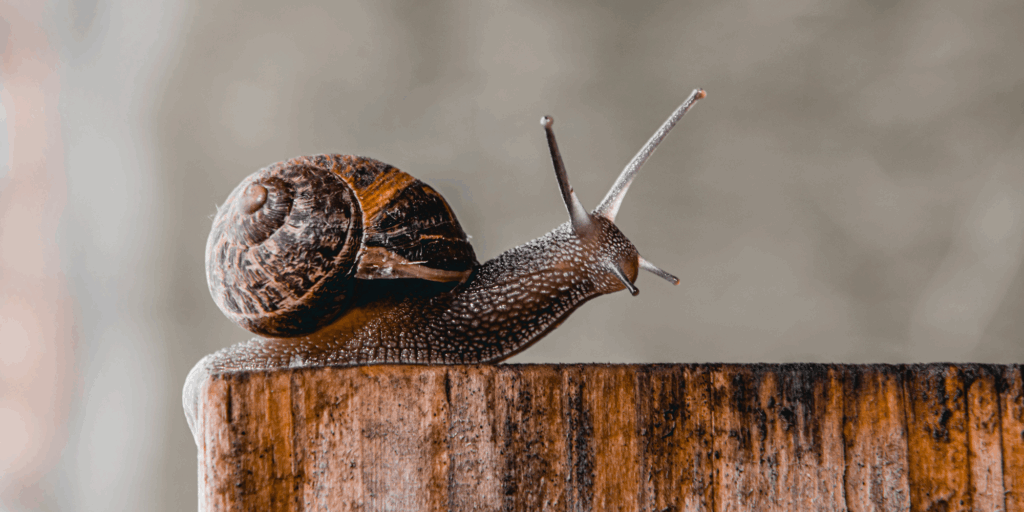
Snail’s Pace
Once upon a time, Floridienne was a dull chemicals company, but it reinvented itself as a specialist in culinary delicacies—think escargots. Yet shareholders got even more joy from diversification into Biobest, a company specializing in bumblebees for crop pollination and protection. Floridienne acquired this Flemish business in 2006. At the same time, Compagnie du Bois Sauvage also joined the story. Today, even Sofina has a stake in Biobest, whose roots are in Westerlo. That business still runs well, but Floridienne’s half-year figures are nevertheless disappointing. The Life Sciences division grew revenue 9.8% to 259.5 million euros, which is fine. Group revenue was 327.5 million euros, up 6.3% from the same period last year—also fine. But operating profit fell 9.1% to 36 million euros, and net results swung to a loss of 8.2 million euros, versus a profit of 5.3 million a year earlier. Net financial debt increased in six months from 209.5 million euros to 229.1 million euros. I would rather part ways with my Floridienne shares.
Did you know…
that Floridienne was founded in 1898 and owes its name to its early activity: processing phosphate from the massive Bone Valley deposits in Florida, USA? Florida remains a major phosphate producer to this day.
This article was translated from Dutch and was originally published on Spaarvarkens.be.
Responses