
Before the bell: Novo Nordisk reports

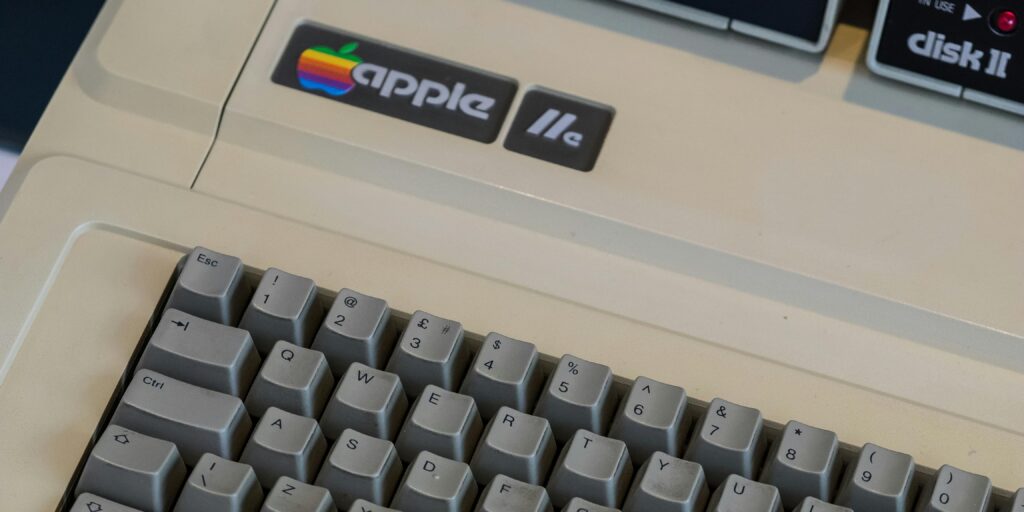
ABN AMRO profit drops, US consultancy plunges, Apple celebrates a historic anniversary.
There was little movement in the markets yesterday. In Europe, indices ended only slightly higher, while on Wall Street, the S&P 500 fell 0.5% and the Nasdaq dropped 0.7%. As expected, Palantir (+7.9%) impressed with strong results. Pfizer (+5.2%) also performed well for the same reason. UnitedHealth (+4.2%) managed to recover somewhat after its recent slump. Gartner (-27.6%) suffered the biggest hit of the day. The well-known and widely used research and consulting firm seems to have lost investor confidence. The published figures were solid, but the company revised its full-year revenue outlook from 6.56 billion dollar to 6.46 billion dollar, citing “clients becoming more cautious in ordering studies.” The Bel20 index (+1.2%) stood out positively thanks to strong performances from Argenx (+1.9%) and UCB (+1.2%).
This morning, the Topix in Japan is up 1%, while the Hang Seng in Hong Kong edges just 0.2% higher. Today, Ahold Delhaize and Nyxoah will publish their results. In Germany, it’s the turn of Bayer, Commerzbank, and Zalando. Also on the earnings calendar: Airbnb, Disney, Gilead, Glencore, McDonald’s, and Uber. Novo Nordisk this morning reported 18% revenue growth. That’s less than analysts had expected last week, but the Danish pharma giant had already warned of this. Tomorrow, the company’s new CEO will take the helm. Roularta begins the trading day ex-dividend, after paying a gross dividend of 3 euro to help fund its buyout by major shareholder De Nolf.
ABN AMRO posts lower profit
Tomorrow before market open, KBC will report its quarterly results. They’ll likely look better than those of its Dutch peer ABN AMRO, which announced this morning that net profit for the past quarter was 606 million euro—6% less than the same period last year. The Dutch bank’s mortgage portfolio grew by 1.8 billion euro to 160 billion euro, but margins on those loans are slightly lower while costs are rising. The French CEO said she wants to “keep an eye on the little ones” (editor’s note: referring to the bank’s costs, not children—apologies for the joke, which could be seen as sexist, but I would have said the same if the CEO were a man). ABN AMRO also reassured shareholders with a new share buyback program worth 250 million euro, set to begin tomorrow. I’m quite confident KBC will report a profit increase tomorrow. That would be justified—since the beginning of the year, the Belgian bancassurer’s share has gained 24%, or 28% including the dividend.
From millions to trillions
Numbers are relative. A million Belgian francs used to be a fortune, but today we talk in billions of euro and public companies worth thousands of billions of dollars. Raf Van Gorp, the founder of Ravago, once made the cover of Trends magazine as “the man of ten billion” (Belgian francs). His son-in-law recently valued the same company at 5.6 billion euro—that’s 226 billion francs. Is that possible? Yes—thanks to the powerful cocktail of inflation and solid revenue and profit growth of strong businesses. Sometimes it all moves quickly. In October, OpenAI was valued at 157 billion dollar. At the start of this year, Softbank arranged a capital increase of 40 billion dollar, boosting the valuation to 300 billion dollar. Now, barely six months later, another capital round is reportedly in the works—this time valuing OpenAI at 500 billion dollar. Too fast? If you work at OpenAI, you can sell your shares at that new valuation. Or you could choose not to buy into Sofina, which invests in these private companies. But if you see the potential and believe the valuation can rise further, hold on to those Sofina shares.
Did you know…
that exactly 28 years ago, something nearly unthinkable happened in the tech world? On August 6, 1997, Apple announced that archrival Microsoft would invest 150 million dollar in the company. That cash, combined with the determination of Steve Jobs, saved Apple from bankruptcy. Today, Apple is worth 3,000 billion dollar, and Microsoft is valued at 4,000 billion dollar.
This article was translated from Dutch and was originally published on Spaarvarkens.be.
Responses