
Before the bell: Chinese Stocks Take the Lead

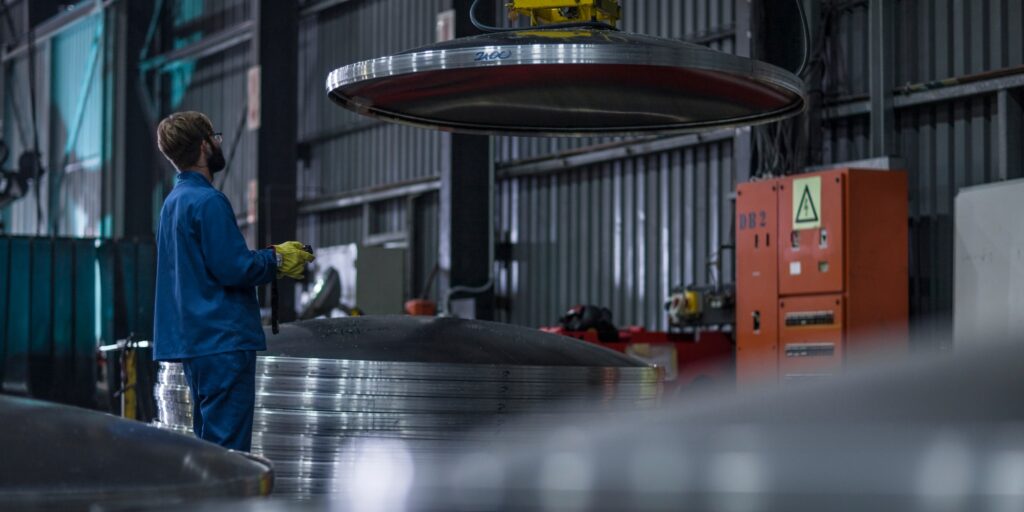
Last week, Chinese stocks surged. Will we see new U.S. tariffs on steel and aluminum imports this week?
Last week, Asian stocks took center stage, with Hong Kong’s Hang Seng Index soaring 4.5%. Shares of electric vehicle maker BYD (+20%) and e-commerce giant Alibaba (+7.3%) posted strong gains. European markets also saw modest gains, averaging +0.7%. The Euro Stoxx 50 is now up nearly 9% year-to-date. However, Belgium’s Bel20 lagged, rising just 0.3% last week. In Brussels, Lotus Bakeries couldn’t keep up with the rising demand for Biscoff cookies, leading to a 6.1% drop for the week. Melexis (-2.5%) and X-Fab (-5.7%) also underperformed after disappointing earnings and guidance. Meanwhile, German semiconductor rival Infineon surged 19.6% over five days, as it slightly exceeded expectations despite challenging market conditions. In the U.S., markets ended slightly in the red after investors analyzed the first earnings reports from the ‘Magnificent 7.’ Alphabet (-7.3%), Amazon (-2.1%), and Microsoft (-0.5%) failed to excite investors. Today, Donald Trump is expected to announce a new wave of tariffs on steel and aluminum.
This morning, Japan’s Topix index remains flat, while Hong Kong’s Hang Seng Index climbs 1.7%. It’s the calm before the storm in terms of corporate earnings, with fast-food giant McDonald’s kicking off the reports later today.
Looks Can Be Deceiving
That’s certainly the case for beauty company e.l.f. Beauty Inc. For the first time in four years, the U.S. cosmetics brand is expected to post growth below 10%. When growth slows, valuations tend to normalize—and e.l.f. Beauty’s stock dropped 19.6% on Friday. Another major beauty brand, Ulta Beauty, won’t report earnings until next month, but it still fell 6.7% on Friday. Meanwhile, Estée Lauder has plunged over 20% in the past week after announcing up to 7,000 job cuts. The beauty giant has lost more than half its value in a year, struggling with tough conditions in Asia.
Electrification and Consolidation
This morning, Dongfeng Motor Group and Chongqing Changan Automobile saw their stocks surge 20% and 5.5%, respectively. Earlier in the Hong Kong session, Dongfeng even spiked 90% at one point. Both automakers announced restructuring plans over the weekend, and investors are speculating that mergers could be on the horizon, similar to recent developments in Japan. Like their European counterparts, traditional Chinese carmakers are under pressure from new EV manufacturers. Last week, BYD reported a 50% YoY surge in January production, rolling out 300,538 vehicles—a number already familiar to Spamalot viewers from Saturday’s show.
Did You Know…
that the Baltic states—Lithuania, Latvia, and Estonia—officially disconnected from the Russian power grid this weekend? Instead, they switched over to the European grid via Poland, reducing their dependence on Russian electricity.
This article was translated from Dutch and was originally published on Spaarvarkens.be.
Responses