
Before the bell: improvement in the Middle East

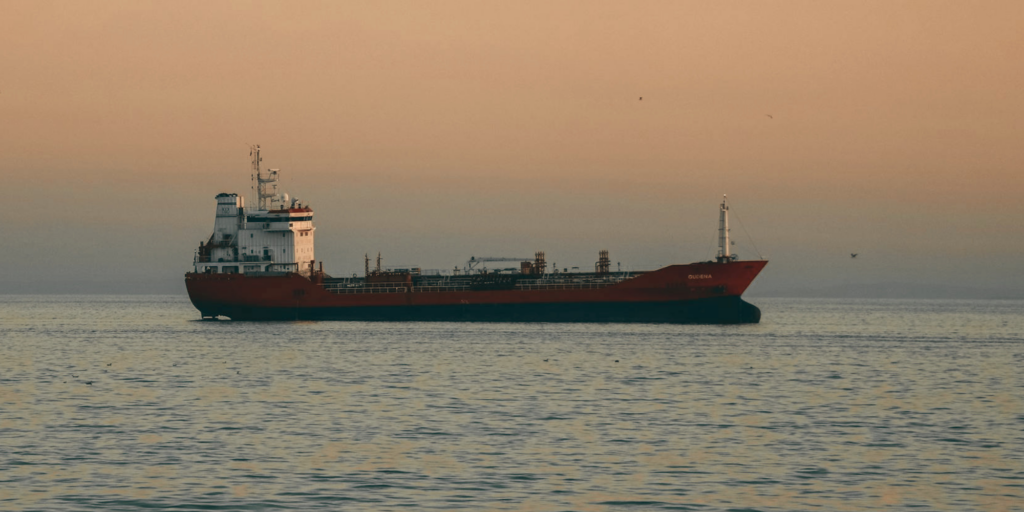
Following reports that more tankers are being allowed through the Strait of Hormuz, market sentiment turned positive on Thursday. Asian markets are rising this morning.
More oil is once again flowing through the Strait of Hormuz. On Thursday, at least 4 million barrels reportedly passed through, according to energy analyst Javier Blas of Bloomberg. Although this remains only a fraction of the normal 20 million barrels, markets still took encouragement from the news. Despite oil prices rising by 12%, both the S&P 500 (+0.1%) and the technology-heavy Nasdaq (+0.2%) managed to close higher. In Europe, gains were driven by oil-related stocks such as Shell (+2.7%) and SBM Offshore (+2.8%). Fuel consumers, including Air France-KLM (-3.8%), were among the losers. Tesla (-5.4%) was also among the biggest decliners following disappointing sales figures. After the close, Trump announced new US tariffs of 100% on pharmaceuticals, although for Europe the rate would be 15%.
In Asia, markets are mainly responding to the positive developments in the Strait of Hormuz. South Korea’s Kospi index is up 2.8%, while Japan’s Topix index is gaining 0.8%. Stainless steel producer Aperam confirmed its first-quarter profit guidance, reporting higher operating profit than in the previous quarter. Property developer Nextensa has obtained a new permit to build a district around Tour & Taxis in Brussels, a project estimated to exceed half a billion euro.
Why I will buy oil stocks on a pullback
On Monday, I promised to discuss the offshore oil sector. If there is one thing that is clear, it is that this planet runs on oil. While demand for oil is expected to continue rising for years, production from existing oil fields is projected to decline by 10 million barrels per day in the coming years. That is comparable to the impact the Strait of Hormuz has on global oil markets. It is one of the reasons why oil majors such as TotalEnergies are increasing their budgets to expand offshore drilling in regions such as Africa and Brazil. However, this requires oil platforms. I expect oil prices to decline again once tensions in the Middle East ease. If such a decline occurs, stocks like TotalEnergies could become attractive entry points. Let us assume oil prices fall sharply by 40%. At a price of 60 dollar per barrel, the group would still generate a strong free cash flow of 11 billion dollar (based on pre-Iran conflict estimates). This could rise to 15 billion dollar by 2030, even at oil prices well below the current 60 dollar per barrel. This is one of the few sectors that is unlikely to be disrupted by AI and will remain essential for at least the next 30 years. That said, it is preferable to buy on a pullback rather than after the recent rally.
Why I believe in the offshore oil sector
As mentioned, TotalEnergies requires offshore platforms. The reason is that offshore oil production has recently become much more cost-efficient. Whereas offshore drilling used to be expensive, the most advanced platforms can now break even at oil prices between 35 and 50 dollar per barrel in certain locations. The reality is that the world needs these barrels to maintain stable oil supply. Another key point is that the sector has faced an oversupply of oil platforms for more than a decade following a period of overinvestment. This oversupply is gradually shrinking as platforms are decommissioned and scrapped. Twelve years after the start of this oversupply, utilisation rates have returned to around 90%, and for higher-quality platforms are expected to reach 95% from next year. This indicates that the oversupply is nearly gone, while the market is growing at 8% annually. Currently, an existing platform can be leased for around 400,000 dollar per day. If oil majors want to commission new platforms in the future, day rates would need to roughly double to make projects economically viable. This benefits deepwater drillers such as Transocean and Ensco. Both companies are currently in merger talks, which could generate synergies of around 200 million dollar per year.
Did you know…
that Western markets are closed today due to Good Friday? The Spaarvarkens.be team wishes you a happy Easter.
This article was translated from Dutch and was originally published on Spaarvarkens.be.
Responses