
Before the bell: memory sector takes a hit

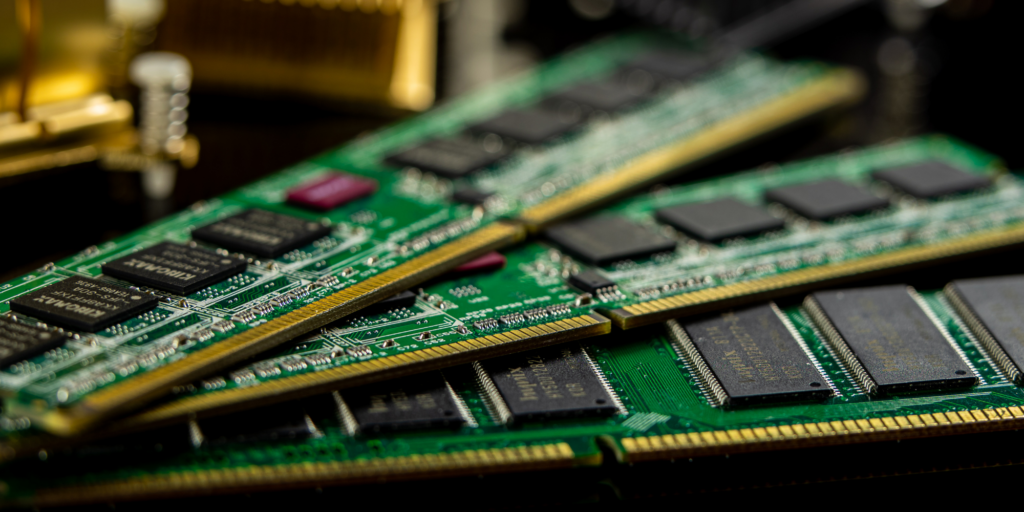
While European markets were able to catch their breath on Monday, the picture in the United States was very different. The memory chip sector in particular came under heavy pressure.
While European markets enjoyed a relief rally yesterday, US markets gave up all their gains. The Euro Stoxx 50 (+0.7%) clearly outperformed the technology-heavy Nasdaq (-0.7%). One of the main reasons was the semiconductor sector. Last week, Alphabet (-0.2%) unveiled a new technology that reduces the need for memory in chips. As a result, stocks such as Micron Technology (-10%), SanDisk (-7%) and Western Digital (-8.7%) came under pressure. The same trend was visible in Europe, where ASML (-3%) and ASMI (-3.1%) also lost ground.
Asian markets are again weak this morning. South Korea’s Kospi is down 3.3% and has already lost 10% over the past week. In Japan and China, markets are also slightly under pressure, while gold and silver prices are rising by 1% and 2% respectively. On the corporate front, pharmaceutical company UCB stood out. The group announced this morning that Europe has approved its drug Kygevvi for the treatment of a condition that leads to muscle weakness. Galapagos also confirmed it has finalized a deal with Gilead related to blood disorders, according to a press release on Tuesday. Importantly, the agreement announced last week frees up capital for share buybacks or dividends.
“Is it spices or is it meat?”
That is what Pascal asked himself out loud on Saturday while reviewing the companies reporting results this week during Spamalot. His attention was drawn to the logo of McCormick & Company, which stood alone in the earnings calendar. How Pascal knows the company is unclear, but the spice producer is far from small, with a market capitalisation of 14 billion dollar. McCormick is the global leader in spices, seasonings and flavour solutions, operating in the same broad sector as Nestlé and Unilever. Those looking to add some “pepper” to their portfolio will not find it here. This is not a growth stock, but rather a mature value stock. Whether the economy expands or contracts, people continue to eat. The company is therefore known for its consistent cash flows and long track record of dividend payments and increases. That said, the stock has lost nearly 25% since the Iran conflict began. The likely explanation lies in higher raw material costs. Today’s results should provide more clarity on how severely McCormick has been impacted by geopolitical tensions.
A hidden mono-holding
Want to know a secret that few investors are aware of regarding the Belgian holding Floridienne? Anyone looking to assess its performance should realise that Floridienne is not truly a diversified holding, but effectively a mono-holding. On paper, the company has three divisions: chemicals, food and life sciences. In reality, the chemicals and food divisions can largely be ignored. Together, they account for only about 10% of operating profit and are therefore, as the French expression goes, “quantité négligeable.” The remaining 90% of operating profit comes from the life sciences division, and more specifically from BioFirst, the global leader in biological pollination. The group will publish its quarterly results today.
Did you know…
that stricter European pesticide regulations directly benefit BioFirst, and therefore indirectly Floridienne? Today, nearly 90% of Floridienne’s operating profit comes from its BioFirst division, which focuses on biological pollination using bumblebees.
This article was translated from Dutch and was originally published on Spaarvarkens.be.
Responses