
Before the bell: Trump threatens 100% tariff on Canada

The price of gold climbed this morning to near the psychological level of 5,000 dollars per ounce. Geopolitical uncertainty is rising again as Trump threatens to impose a 100% tariff on Canada. Gold prices climbed 2% on Monday toward 5,100 dollars per ounce.
US stock markets are heading into one of the busiest weeks of the earnings season. No fewer than 103 companies from the S&P 500 will report results this week. Major names such as Apple, Microsoft, Meta and Tesla will open their books. On Friday, it was already noticeable that the Magnificent Seven stocks were among the strongest performers. Microsoft (+3.3%) was the biggest winner, followed by Amazon (+2.1%) and Nvidia (+1.5%). Chipmaker Intel (-17%) came under pressure as the company continues to struggle with production issues. Rising oil prices gave energy stocks such as Occidental Petroleum (+2.2%) and BP (+1.7%) a boost.
In Asian trading, the Topix (-2.1%) lost ground as the Japanese yen suddenly strengthened sharply against the dollar. The Japanese government issued a statement saying it would intervene against speculative moves in the yen. Markets are also waiting to see how they will react to the latest trade threat directed at Canada. US President Trump warned of a 100% tariff if Canada were to strike a trade deal with China. This morning, gold prices rose 2% toward 5,100 dollars per ounce. Silver was even more striking, jumping 7.8% to 109 dollars per ounce. The rally in precious metals therefore continues. Mining companies such as Barrick Gold (+3.7%) and Pan American Silver (+4.5%) already benefited from strong gains on Friday, which are likely to continue today. On the corporate front, Monday is relatively quiet, with the main focus on Ryanair’s results. The airline saw passenger numbers rise 6% year-on-year in the previous quarter. Later today, results are also expected from steelmaker Nucor and energy company Baker Hughes.
Ryanair keeps a close eye on costs
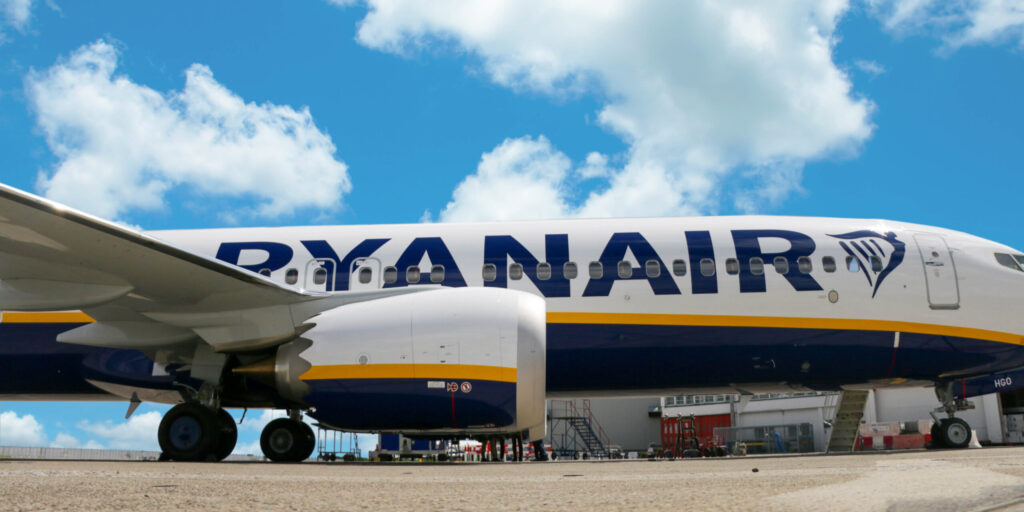
There is no such thing as bad publicity. Ryanair CEO Michael O’Leary is a firm believer in that philosophy. Elon Musk called O’Leary an “idiot” on his social media platform because Ryanair refuses to install Starlink on its aircraft. O’Leary dryly responded that only an estimated 5% of passengers would be willing to pay for Wi-Fi. According to Ryanair, installing Starlink would cost around 250 million euro and increase fuel costs by a further 100 million euro per year. Ryanair therefore keeps a tight grip on costs, and that discipline is also reflected in the quarterly figures the group published today. The airline saw its revenue rise 9% in the previous quarter to 3.21 billion euro. The controversy around Musk may also help support load factors during what is traditionally a quieter season. Ryanair cleverly played into the media attention by launching the “Big Idiot” promotion, selling 100,000 tickets at 16.99 British pounds. Idiots they are not at Ryanair.
When should you sell as an investor?
This may well be the most difficult question investors struggle with. There are good reasons why, as an investor, you should not hesitate to sell. In the case of accounting problems, a declining industry or structurally weakening figures, you should not hesitate to hit the sell button. But what if a stock or asset has risen sharply and looks expensive? In the stock market, that is often not a good reason to sell and is a common investment mistake, because something that is expensive can remain expensive for a long time. The advantage of investing in equities is precisely that some stocks multiply and end up carrying the return of your entire portfolio. These are known as multibaggers, and they often look expensive according to traditional valuation metrics. If you sold purely on valuation, you would never have held Lotus Bakeries, Nvidia or Amazon. Occasionally “trimming” a position — selling part of it to take profits and rebalance — can be justified. You then let the remainder run as long as the long-term investment case remains intact. In the current rally in precious metals, that may be a sensible approach. Trim a little, but do not make the mistake of being triggered by high percentage gains (for example +100% in a short period) or by fear of a correction into selling everything. It is precisely that beginner’s mistake that often costs investors the full potential of a multibagger.
Did you know…
that the construction of data centres is significantly increasing demand for aluminium? According to the CEO of aluminium producer Alcoa, every gigawatt of energy capacity in a data centre creates additional demand of around 1,500 tonnes of aluminium. That is equivalent to the aluminium used in roughly 100 million beer cans.
This article was translated from Dutch and was originally published on Spaarvarkens.be.
Responses