
Before the bell: Bring on the earnings!

Speculation is running wild. Crypto stocks rally on high bitcoin prices, and silver reaches a 15-year-high.
With only small gains (S&P 500 +0.05%) and a negligible loss for the Stoxx Europe 600 index (-0.06%), investors largely shrugged off the threat of 30% import tariffs on European goods starting 1 August. It’s high time for real earnings data—perhaps the first chance to see the impact of these tariffs. Some companies, like German chemical giant BASF, have already warned that tariffs will hurt profits. Analysts will be watching margin evolution most closely, as that’s where the impact is expected to appear first. It’s not yet reflected in inflation figures, possibly because companies are absorbing the tariffs at the expense of profit margins. For instance, Volvo Car (-4%) reported that it can no longer make a profit on its large EX90 SUV due to tariffs. Solvay also expects profits to fall by over 10% this year. Meanwhile, bitcoin has surpassed 120,000 dollar, boosting crypto stocks like Coinbase (+1.8%) and MicroStrategy (+3.8%). The latter is a software company that has (so far successfully) bet big on bitcoin, largely with borrowed funds.
In Tokyo, the ten-year interest rate rose this morning to 1.59%, the highest level in 15 years. Investors fear that pre-election spending promises will add to Japan’s already high debt. Japanese stock markets barely reacted. Hong Kong is up 0.75%. Today, markets are watching JPMorgan’s pre-market earnings and the results from Wells Fargo and BlackRock, along with updates from Nvidia, which has now been cleared to sell more chips to China.
Which Belgian chip stock should you choose?
Melexis or X-Fab—which of the two Belgian chip companies is the better pick? Most investors will lean toward Melexis, a chip designer for the automotive sector with a long market track record, solid long-term growth, strong margins, and a generous dividend. So far this year, Melexis has gained 32.8%, while X-Fab did even better with a 38.6% rise. X-Fab’s earnings are more volatile but still largely follow the automotive chip cycle, which accounts for around 70% of its revenue. A significant portion of that comes from Melexis. Melexis does not manufacture chips itself but outsources production—mainly to X-Fab. This gives X-Fab higher fixed costs, making its results more sensitive to the cycle. When the cycle picks up, this sensitivity becomes an advantage, often leading to a sharper share price increase. What about the outlook? Melexis reports on 30 July, with X-Fab following one day later.
Which precious metal is your pick?
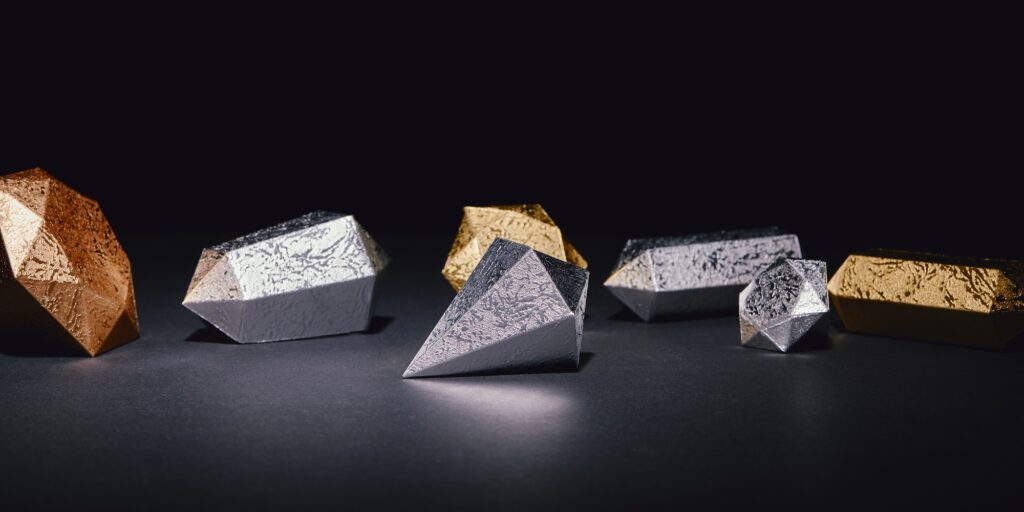
Silver is now trading around 38.5 dollar per ounce, its highest level since 2011 after a long slumber. Only in recent weeks has silver started outperforming gold. Since the beginning of the year, silver has gained 31.6%, compared to 27% for gold at 3,353 dollar per ounce. Over a five-year period, silver is also ahead: 94.7% versus 85% for gold. The differences between the two metals are substantial: silver is far cheaper and its market is much smaller. Unlike gold, which is mostly used in jewelry and held as an investment (including by central banks), silver has extensive industrial applications. The gold market is much larger and more stable, while silver is highly volatile. After a big rally, the silver price tends to fall back sharply as industry seeks alternatives. We don’t recommend it, but for those wanting to take a gamble, an ETF in silver is likely a better choice than a silver mining stock—those are even more speculative than the metal itself.
Did you know…
that the most popular car in Flanders is the BMW X1, while Walloon drivers tend to go for budget brand Dacia, especially the Sandero? Our French-speaking friends may be making the smarter investment: cars lose value very quickly.
This article was translated from Dutch and was originally published on Spaarvarkens.be.
Responses