Before the bell: One Big Beautiful Day

Wall Street is closed today for Independence Day. Yesterday, U.S. markets closed at new record highs, while stocks in Asia are trending lower this morning.
Wall Street headed into the long weekend with solid gains. The S&P 500 rose 0.8%, while the Nasdaq added 1%. Within the Nasdaq, First Solar (+8.5%) led the way, but even stronger performances came from solar peers outside the index like Sunrun (+16.8%) and SolarEdge (+16.7%). Solar energy stocks have been rebounding since Beijing cracked down on dumping practices by Chinese producers and following the removal of an extra tax from Trump’s budget and tax legislation. Moreover, new solar projects will continue to benefit from subsidies, provided they’re operational before the end of 2027. That deadline pressure might actually result in more revenue for the sector over the coming years rather than less. Across Europe, stock markets gained an average of half a percent. In Frankfurt, SAP rose 2% while BASF fell 2.2%. In Brussels, Melexis (+5.1%) was the top performer in the Bel20, while UCB dropped 1.9%.
Asian markets are in the red this morning. Japanese stocks are down 0.1% on average, while Hong Kong’s index has fallen 0.6%. There’s little macroeconomic data scheduled today, with German factory orders in May being the rare exception. No corporate earnings are expected either. The U.S. markets remain closed for Independence Day, and it’s still a bit early for the second-quarter earnings season.
Alibaba Health crashes
This morning, Alibaba Health Information Technology is the biggest loser on Hong Kong’s Hang Seng Index, dropping 6.4%. The parent company Alibaba holds a 64% stake in the firm. The decline is technical in nature and not due to poor earnings or weak guidance. What’s going on? As mentioned yesterday in our After the Bell update, Alibaba issued an exchangeable bond—a bond that investors can convert into Alibaba Health shares. These types of bonds are primarily bought by specialized convertible arbitrage hedge funds. Their strategy? They buy the bonds, and with them, the embedded call option on Alibaba Health shares. To hedge their equity exposure, they short the stock. This creates a near-perfect hedge. Then, they wait. If the share price rises, the delta of the option increases, so they need to short more shares to remain delta-neutral. If the share price falls, the delta drops, prompting them to buy back shares. So, every time the stock rises, they short more. Every time it falls, they buy back shares at a lower price. In volatile times, these hedge funds can profit handsomely.
Bob the Builder lives in the Netherlands
The construction sector is booming—at least in the Netherlands. Take BAM for example (does the name make you think of The Flintstones?). Over the past two years, the stock climbed from 1.8 euro to 7.3 euro. Rival Heijmans surged from 11.6 euro to 52.4 euro in the same period. Investment holding HAL sees further potential and announced a deal yesterday to acquire the Dutch operations of VolkerWessels, a company owned by Reggeborgh that also operates in the United Kingdom, North America, and Germany—though HAL is only interested in the Dutch division. Clearly, there’s a lot more building expected in the Netherlands. While the purchase price wasn’t disclosed, VolkerWessels generated 3.6 billion dollar in Dutch revenue last year and posted 217 million euro in operating profit.
Did you know…
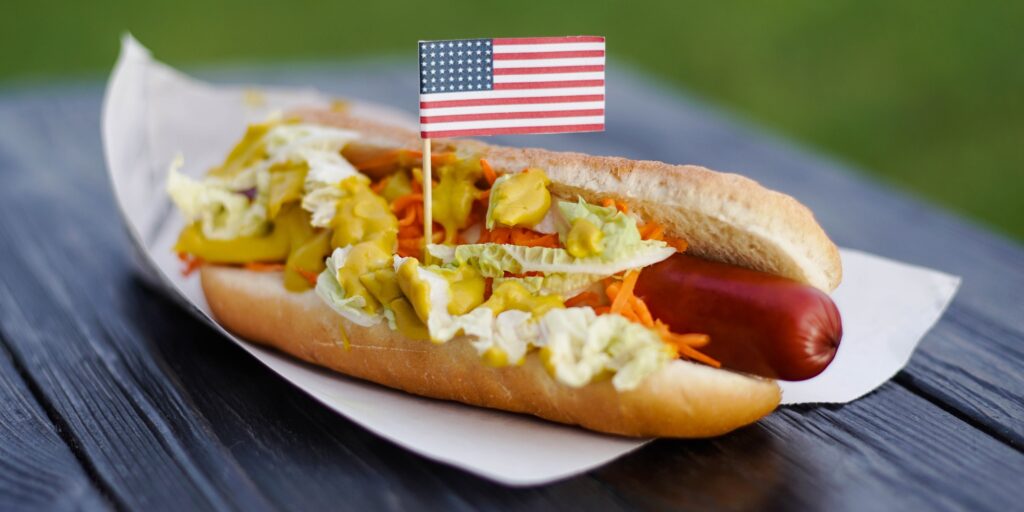
that American consumers are big spenders on Independence Day? They shell out around 10 to 11 billion dollar to celebrate their independence. Over 150 million hot dogs are eaten, and the day consistently ranks in the top three for beer consumption in the U.S.
This article was translated from Dutch and was originally published on Spaarvarkens.be.
Responses