
Before the bell: tariffs back in the spotlight

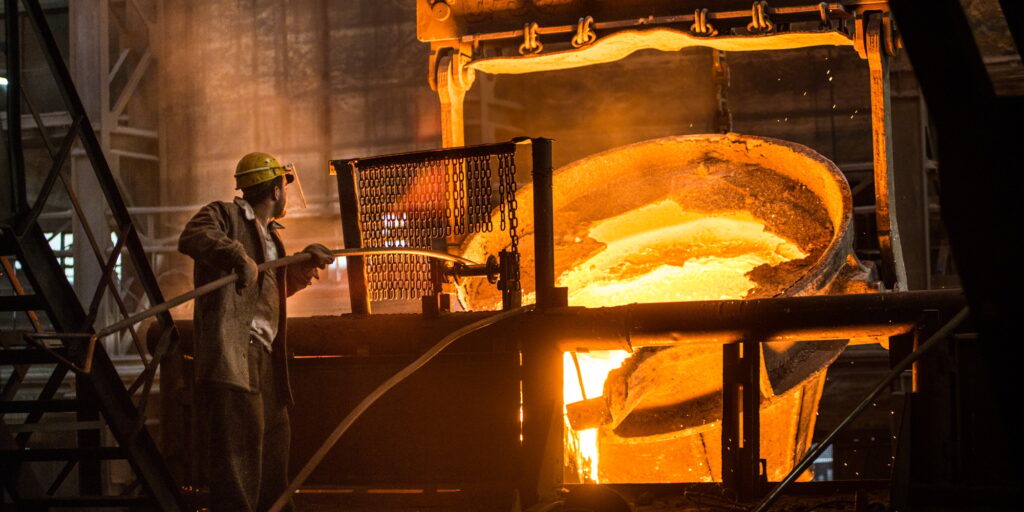
US steel is red hot, while Chinese purchasing managers are growing more pessimistic.
European stock markets struggled to find momentum yesterday. The Euro Stoxx 50 ended the day 0.2% lower, while the Bel20 in Brussels closed nearly flat at +0.1%. In the United States, the S&P 500 and Nasdaq gained 0.4% and 0.7%, respectively.
In Asia, Japan’s Topix remained flat, while Hong Kong’s Hang Seng Index rose 1.1% this morning. The Caixin PMI survey for Chinese purchasing managers came in at 48.3 for May, down from 50.4 in April. A sharp decline in export orders pushed the index below the 50 threshold for the first time since September. In PMI surveys, a reading below 50 signals contraction, while one above 50 points to economic growth. There’s little corporate news in Europe today. Across the Atlantic, however, Dollar General, NIO, and Signet Jewelers will report earnings before the market opens, while CrowdStrike and ready-meal producer Mama’s Creations will release results after the close.
Steel stocks rally hard in the United States
After President Donald Trump announced that import tariffs on steel and aluminum would rise from 25% to 50%, shares of American producers soared on Monday. Major winners included Cleveland-Cliffs (+23.7%), Nucor (+10%), Century Aluminum (+21%), Commercial Metals (+5.6%), and Steel Dynamics (+10.3%). The losers? European steelmakers. But they fell far less than their US counterparts gained. ArcelorMittal dropped just 0.2%, and Thyssenkrupp slid 0.8%. Interestingly, Acerinox (+0.6%) and SSAB (+7.7%) still managed gains — likely because both operate factories in the United States.
Crude moves?
Saudi Aramco, the world’s largest oil company, raised 5 billion dollar on the London bond market yesterday. The company’s biggest shareholder is the Saudi government, which — like many governments — tends to treat its state-owned firms like cash cows. That’s no different in Saudi Arabia. With low oil prices weighing on Aramco’s balance sheet, the firm has had to tap the bond market to keep paying its generous dividends to the state. The current dividend yield stands at a hefty 6.5% gross annually. On Monday, oil traded at 62 dollar per barrel, down from 82 dollar earlier this year. Thankfully, Aramco still has a strong balance sheet, but it hasn’t ruled out further borrowing to maintain dividend payouts. Taking on debt to fund dividends isn’t typically sound financial practice. While Aramco may be able to afford it, it raises the question: why invest in a company that still operates more like a government entity than a private firm? Investors may want to steer clear of such quasi-state-owned businesses.
Did you know…
that Air France-KLM is struggling to fill seats on its long-haul flights? The silver lining is that low oil prices are giving the airline room to cut fares and attract more passengers. A good tip if you’re planning to fly during the summer holiday season!
This article was translated from Dutch and was originally published on Spaarvarkens.be.
Responses