
Before the bell: Tariffs on pause—but not the market

If you weren’t invested yesterday, you missed one of the best trading days in years. Donald Trump continues to surprise financial markets.
An unprecedented turnaround hit Wall Street yesterday after U.S. President Donald Trump announced a 90-day pause on the tariffs he introduced just days earlier. Representatives of countries willing to negotiate with the U.S.—which, according to Trump, number over 75—can now breathe a sigh of relief. Stock markets reflected that optimism. While European investors had not yet reacted to the news, U.S. indices surged. The S&P 500 jumped 9.5% and the Nasdaq soared more than 12%. It marked the third-largest daily gain for the S&P 500 since World War II. Only during the 2008 financial crisis did the index climb higher in a single session—on October 13 and October 28 of that year, with gains of 11.6% and 10.8%, respectively.
This morning in Asia, investors joined the celebration. Japan’s Topix rose 7.9%, and Hong Kong’s Hang Seng Index added 2.6%. Strangely enough, the tariff pause doesn’t yet apply to China. In fact, Trump increased tariffs on Chinese imports from 104% to 125%. China also reported March inflation data today, showing deflationary pressure. Consumer prices fell 0.1% in March. Later today, the U.S. will release its own inflation data. In corporate news, Belgium’s Fagron will issue a trading update, and CMB.Tech is publishing its annual report. In the UK, supermarket chain Tesco is reporting full-year results, while in Switzerland, Barry Callebaut—the chocolate producer with Flemish roots—is doing the same.
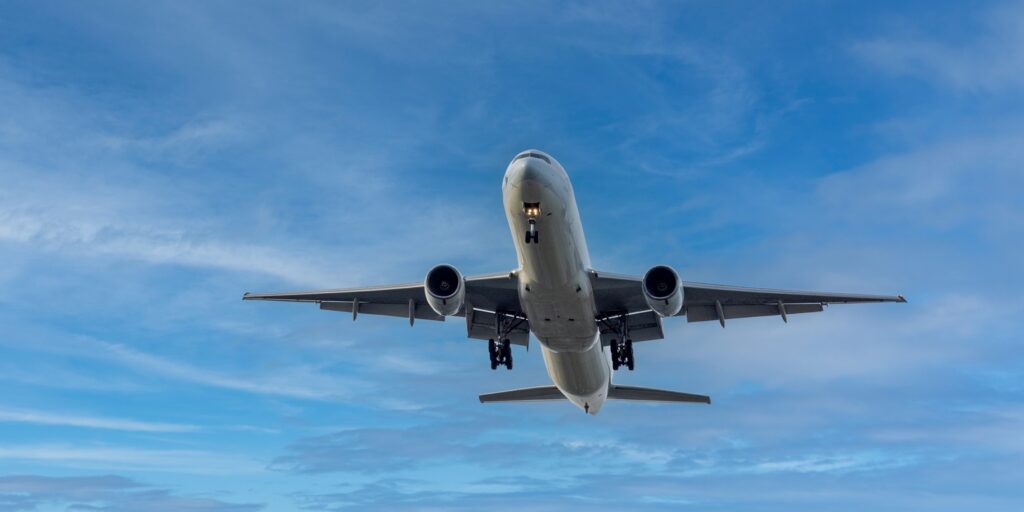
Taking off with the airline sector
Earlier this year, Delta Airlines forecasted 7–9% growth in Q1. Soon after, the company revised its forecast down to 3–4%. The final results are in: revenue hit 13 billion dollar, translating to 3.3% year-on-year growth. For the current quarter, the airline expects growth to flatten out completely. Concerns over a potential U.S. recession and the ongoing trade war have clouded the outlook. It’s no surprise that these were the very companies that rebounded most after Trump’s pause announcement. Delta’s stock jumped 23.4%, and United Airlines surged 26.1%. Unprecedented gains.
Apple goes Bollywood
iPhone maker Apple is feeling the pressure from the U.S.-imposed tariffs on Chinese goods. China has long been one of Apple’s main production hubs. The company ships up to 50 million iPhones to the U.S. annually, and with a 125% import tariff now in place, that could seriously squeeze profit margins. But Apple has a plan. Just this week, more than 10 cargo flights left Chennai, India, headed for the U.S.—likely packed with iPhones. According to Bank of America, Apple may increase India’s share in iPhone production to 60% of all imported devices. That would be a huge relief for one of the hardest-hit companies in the U.S.–China trade war.
Did you know…
The trade war between China and the U.S. is reaching extreme levels? There’s talk of a potential ban on Hollywood films in China. Such a move could hurt American companies like IMAX, which has recently performed well in the Chinese market.
This article was translated from Dutch and was originally published on Spaarvarkens.be.
Responses