
Before the bell: America Not Yet Great Again

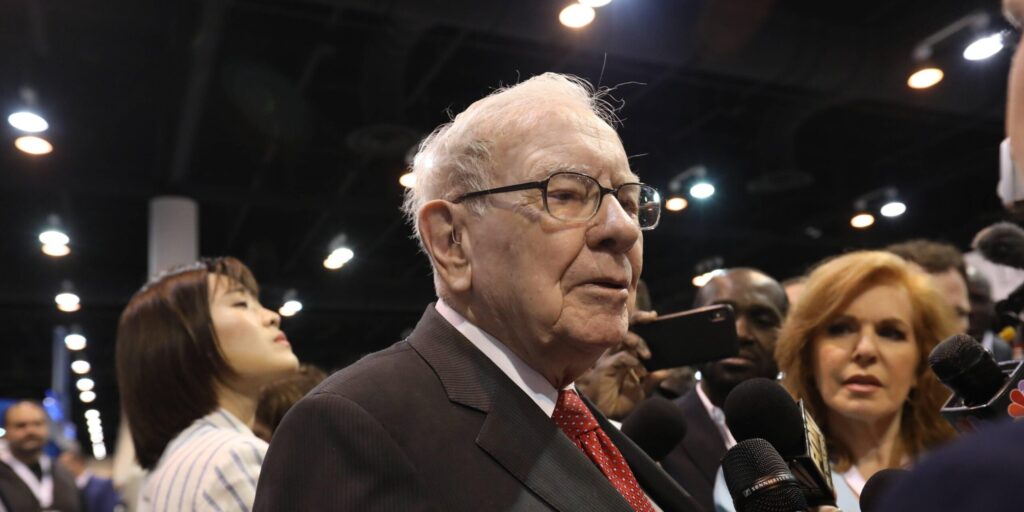
Buffett Writes His Final Letter – Will Friedrich Merz Write a Brighter Future for the German and European Economy?
Friday marked Wall Street’s weakest trading session of 2025 so far, with the S&P 500 dropping 1.7% and the Nasdaq falling 2.2%. Meanwhile, the same day saw Hong Kong’s best session this year, with a 4% gain. Chinese stocks have surged 17% year-to-date, with major companies like Alibaba (+71% in 2025) and BYD (+47%) regaining favor among international investors. Meanwhile, U.S. stocks have struggled to keep their momentum. So far this year, the S&P 500 is up just 2.2%, while the Nasdaq has risen by 1.1%. Though these are reasonable returns after less than two months, European stocks have significantly outperformed expectations, with the Euro Stoxx 50 gaining 11.8%.
All eyes are now on how European markets will react to Friedrich Merz’s CDU election victory. On the one hand, his pro-EU and pro-business stance could breathe new life into the German economy. On the other, forming a strong coalition will be challenging given the rise of far-right parties and a fragmented political landscape. Merz will immediately have to deal with the latest German business confidence reading (IFO index), which could set the tone for market sentiment. This morning, both Tokyo and Hong Kong dipped slightly. Meanwhile, Brussels is gearing up for a busy trading week, kicking off with earnings from Accentis, Iep Invest, Vastned, and Retail Estates. In the Netherlands, PostNL is also set to report its results today.
Warren Buffett Is Not in Buying Mode
On Saturday, Berkshire Hathaway released its annual letter to shareholders alongside its quarterly and full-year results. Warren Buffett hinted that this could be his final letter, as the 94-year-old CEO expects to hand over leadership within the next year.
While Berkshire’s financials are of less importance than the evolution of its investment portfolio, the elephant in the room is clear: Berkshire sold 143 billion dollars worth of stocks last year while purchasing only 9.2 billion dollars in equities. As a result, its cash reserves—including government bonds—have swelled to 334 billion dollars. The firm’s two-thirds reduction of its stake in Apple has already been widely discussed, but Buffett was notably bullish on his positions in five Japanese conglomerates. He praised their management for being far less aggressive in executive compensation, a subtle jab at the American culture of excessive bonuses.
Unrealized Gains
On Friday, Sofina surged 3.2% following reports that Bytedance (TikTok), its most significant holding, is now valued between 400 and 450 billion dollars by several investors—a sharp increase from its 275 billion dollar valuation in mid-2022.
While TikTok remains immensely popular, its future in the U.S. remains uncertain. Technically, the app should have already been banned or sold to a non-Chinese (i.e., American) investor, but analysts still believe Bytedance is one of the world’s most valuable companies—even without its U.S. business. If valued similarly to Meta, Snap, or Pinterest, Bytedance’s Chinese operations alone could be worth 700 billion dollars.
Yes, Chinese stocks are significantly undervalued, but Spaarvarkens readers already know this. Unlike many investors, we—like Sofina—have maintained exposure to Chinese equities and continue to see opportunities in this market.
Did You Know That…
The Belgian Official Gazette published 141,310 pages in 2024—20,000 more than the previous year. When will the bureaucratic overdrive finally slow down?
Responses