
Before the bell: New Trade Wars

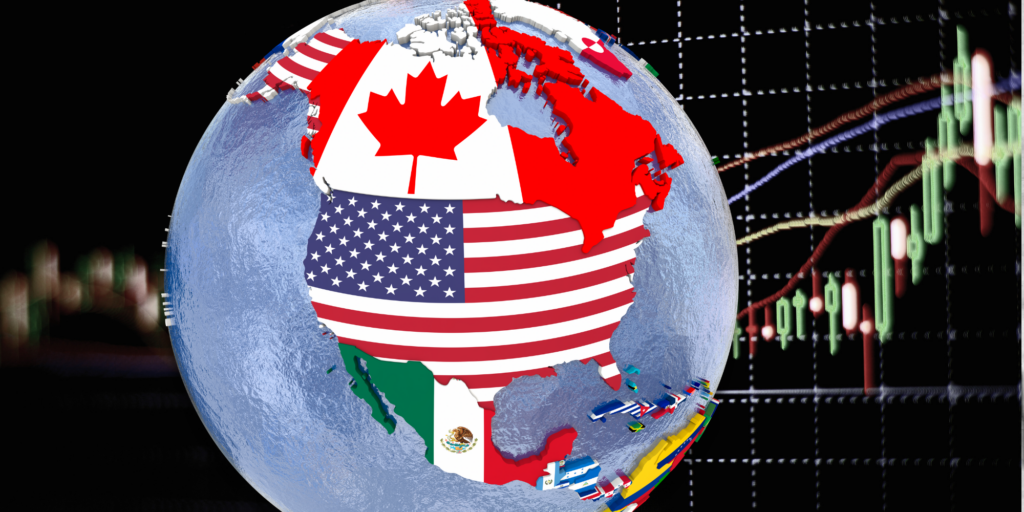
Asian markets decline after Trump’s new trade tariffs on China, Canada, and Mexico. Palantir reports earnings as the busiest week of the earnings season begins.
As of this weekend, it’s official: The United States has launched a trade war with neighboring Canada and Mexico, imposing 25% tariffs on goods from both countries. Investors are now watching how this move will impact U.S. automakers like General Motors, Stellantis, Ford, and Tesla, as cars for the American market are set to become more expensive. Both Canada and Mexico have already announced retaliatory measures. Meanwhile, Chinese goods will now face an additional 10% tariff, and Beijing has stated it will respond in kind.
This morning, the euro continues to weaken after President Trump threatened to extend trade tariffs to Europe as well. European markets are bracing for a red start to the week, with futures pricing in a 2.5% decline at the opening. In Asian trading, commodity prices such as iron ore and copper are dropping sharply, while oil prices are up 2%. Chinese markets remain closed for the Lunar New Year, but in Hong Kong, trading has resumed, with Alibaba gaining 5% after investors reacted—albeit with a delay—to news that the Chinese tech giant has developed an AI model superior to DeepSeek.
In Tokyo, the Nikkei index has dropped 2.7%, with Toyota (-5.3%), usually a market leader, now taking a heavy hit. Belgium will see a quiet day in terms of corporate news, but on the tax front, the government’s new capital gains tax is stirring significant controversy. Meanwhile, in the U.S., later today, we’ll get earnings from Palantir, Tyson Foods, and chipmaker NXP.
Belgium Introduces a Capital Gains Tax
Now that the De Wever government is in place, it’s clear that savers and investors won’t be spared from new tax burdens. Under the banner of a “solidarity contribution,” investors will soon face a 10% tax on realized capital gains from stocks, ETFs, mutual funds, bonds, and other investments. Historical capital gains are exempt, but losses cannot be carried forward to offset future gains. The first 10,000 euro in gains will be tax-free, but anything above that threshold will be taxed at 10%. While the rate itself isn’t extraordinarily high, the administrative burden and the fear that this rate will increase over time are unsettling for investors and savers alike. The expected revenue from this new tax is 500 million euro, which remains small compared to the 8.5 billion euro investors already paid last year in withholding taxes, securities transaction taxes, and wealth taxes.
Will Taiwan Semiconductor Also Be Affected?
Another victim of U.S. trade tariffs is TSMC, which has fallen 6% in Asian trading. This is surprising, as the new U.S. import duties target China, not Taiwan. However, TSMC is actively expanding its production in Phoenix, Arizona, precisely to bypass potential trade tariffs. This investment not only protects TSMC from import duties but also ensures a secure chip supply in case of military action by China in Taiwan. Over time, economies tend to adapt to sanctions and other disruptions, and we expect to see more Chinese companies announcing production expansions in the U.S. and Europe in the coming months to bypass Trump’s new tariffs.
Did You Know…
the U.S. auto import market was worth 225 billion dollars in 2024 alone? According to consultancy AlixPartners, the new tariffs could result in an additional 60 billion dollars in costs for the industry.
This article was translated from Dutch and was originally published on Spaarvarkens.be.
Responses