
Before the bell: a thousand bombs and grenades

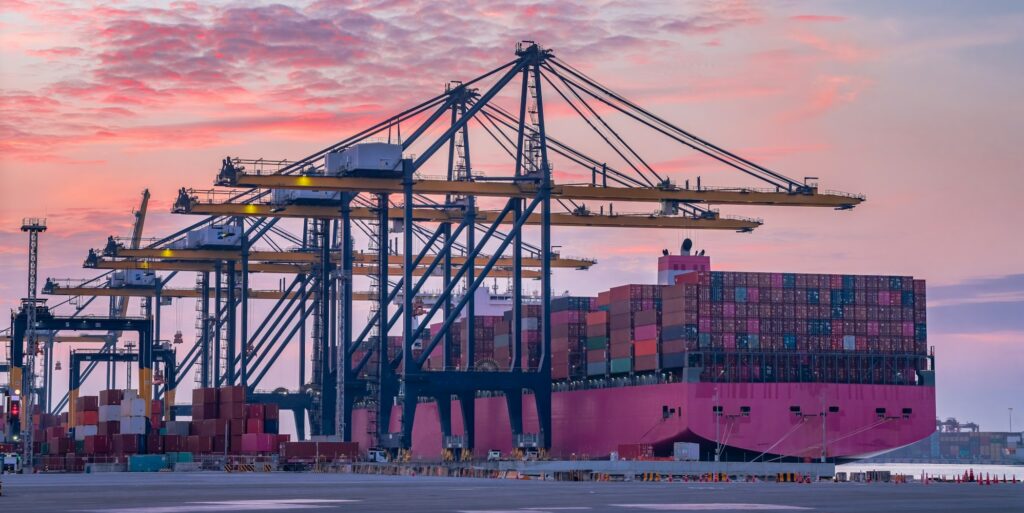
The strike at US ports and the war in the Middle East are also making investors anxious. Except in Hong Kong, where the stock market is already rising sharply.
The US port workers’ strike and the conflict in the Middle East have now reached Wall Street. With the S&P 500 losing 0.9% and the Nasdaq 1.5%, there is no panic (yet). The strike has an immediate impact that would cost the U.S. economy $1.3 billion to $5 billion every day. That seems minuscule in an economy that turns $29,000 billion annually. But if – or when – the lack of parts shuts down factories, the strike will cost much more. The port unions did choose the timing of their action well, as it is barely a month before the presidential election. The Democrats will no doubt push for a quick agreement. In the Middle East, a quick agreement seems impossible. The conflict worries everyone and therefore investors. What a week. And it is only Wednesday. The Brussels stock market seemed impervious to all that violence yesterday. While European stocks fell nearly 1% on average, the Bel20 (+0.7%) shone thanks to Azelis (+3%), WDP (+2.3%) and UCB (+2.3%).
In Tokyo, the Topix (-1%) and the Nikkei (-1.7%) are down this morning. Due to the “golden week,” stock markets in mainland China are still closed, but Hong Kong is up 4.9%. Star stocks Alibaba (+2.8%) and BYD (+5%) also made gains on Wall Street yesterday. At 11 a.m. there are Eurozone unemployment figures and at 2:15 p.m. payrolls processor ADP gives an idea of US employment. TotalEnergies is holding an investor day today.
Just do it
Investors were still assuming yesterday that Nike would publish good figures aftermarket. In a sea of red, the stock managed to close 0.8% higher. The optimism turned out to be partly justified. The sporting goods manufacturer posted earnings of 70 cents per share in its latest quarter. That’s down from $94 cents in the same quarter last year, but better than the expected 52 cents. So much for the good news, as sales were a bit lower than expected. So the brand and products still appear to be catching on with customers less than expected. Adding to that, the company is withdrawing its forecasts for the year and canceling an investor day that was scheduled next month. In doing so, Nike wants to give its new ceo time to settle in. But investors don’t like hearing that. Aftermarket, Nike went 6% lower.
Chemicals
The chemical sector is not doing particularly well in the stock market. But yesterday there was still a gain of 3.8% for Covestro. That German chemical company was still part of Bayer until 2015 and produces plastics used in mattresses, cars and medical devices, among other things. In June last year, Abu Dhabi oil producer Adnoc approached Covestro. Even then, the stock was able to move nicely higher, but a takeover did not prove evident. The two have now – after more than a year of negotiations – reached an agreement. Investors will receive 62 euros per share. The offer is 54% higher than the share price before the announcement last June and 11% higher than Monday’s price. Yesterday’s closing price was 58.06 euros.
Did you know…
LVMH also believes in the potential of low and non-alcoholic beverages? The producer of Moët and Hennessy is taking a 30% stake in French Bloom, a producer of non-alcoholic champagne.
This article was translated from Dutch and was originally published on Spaarvarkens.be.
Responses